

Zeppelin Power Systems GmbH
Booth number: 2E100b
www.zeppelin-powersystems.com
About us
Zeppelin Power Systems is one of the leading providers of propulsion and energy. The company is part of the internationally successful Zeppelin Group. Zeppelin is represented in 29 countries worldwide with over 12,000 employees. In the 2024 financial year, Zeppelin generated revenue of EUR 3.8 billion. With a completed acquisition in 2025, revenue will increase to over EUR 5 billion. Zeppelin Power Systems has been the exclusive sales and service partner for Caterpillar engines since 1954. These are accompanied by own sustainable energy products: Fuel Cell Systems, Battery Installations and Industrial Heat Pumps. More than 1,000 qualified employees offer customizable, highly efficient and durable system solutions and comprehensive services for industrial and marine applications, the oil and gas industry, rail vehicles and power and heat generation. System analysis services and digital products complete the portfolio.

Address
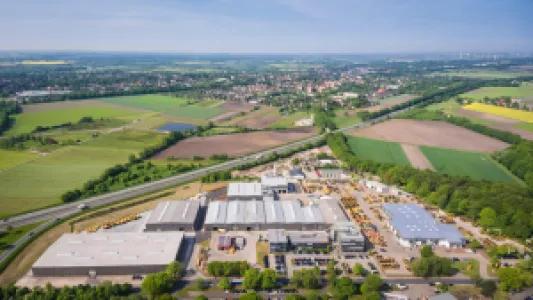
Ruhrstraße 158
22761 Hamburg
Germany
E-mail: zps.hamburg@zeppelin.com
Phone: +49 40 853151-0
Internet: www.zeppelin-powersystems.com
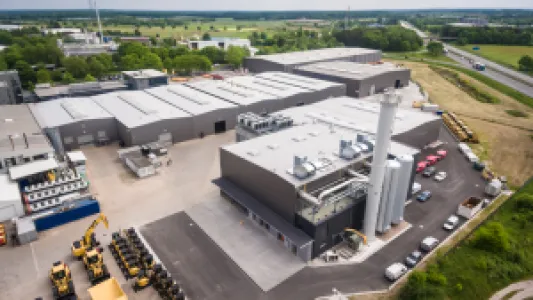
Zeppelinstrasse 2a
28832 Achim
Germany
E-mail: zps.achim@zeppelin.com
Phone: +49 4202 9146-0
Internet: www.zeppelin-powersystems.com
Contact person:
Keno Leites
Head of Fuel Cell Competence Center
E-mail: keno.leites@zeppelin.com
Phone: +49 170 6268538
Products & Services
FUTURE-PROOF ENERGY AND PROPULSION SYSTEMS WITH FUEL CELL TECHNOLOGY
Alternative propulsion concepts such as fuel cell systems, battery storage, and hybrid solutions offer new opportunities for sustainable and zero-emission energy supply – both stationary and mobile. Our energy system analysis provides the foundation by evaluating real load and operational profiles, simulating various system configurations, and assessing efficiency and economic viability in a comprehensive context.
This approach enables tailored, technology-agnostic integrated solutions focused on CO₂ reduction, operational reliability, and long-term viability. In particular, our modular fuel cell systems offer a powerful, scalable, and quiet alternative to conventional generators—flexibly integrable into new or existing applications.
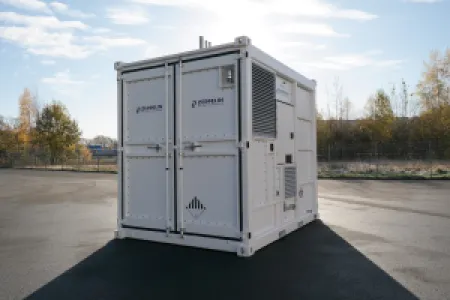
PEM CUBE 200
The PEM Cube 200 is a high-performance (Polymer Electrolyte Membrane) fuel cell CHP designed for grid connected and (semi-) permanent applications, including industrial sites and municipal infrastructure. Its containerized design provides a stable, robust platform for higher power output compared to portable systems, making it ideal for applications where reliability is essential.
Equipped with an integrated water-to-water heat exchanger, the PEM Cube recover waste heat for heating or process use. It is well suited for integrated energy systems with electrolyser and hydrogen storage. Combining clean electricity with the flexibility of heat utilization, it delivers a sustainable, no-emission alternative to diesel generators while supporting compliance with strict environmental standards and long-term sustainability goals.
PEM PACK 100
The PEM Pack 100 is a power generator based on efficient fuel cell technology and an ideal solution for powering construction sites, temporary infrastructure and other off-grid sites with clean and silent energy. It is designed to be as portable and easy to use as conventional power generators, while offering zero emissions, higher fuel efficiency, and virtually no noise and vibrations.
As a future-ready alternative to diesel generators, the PEM Pack combines sustainability with high performance, enabling a reliable power supply for tools, electric machinery and site infrastructure, while complying with increasingly strict environmental regulations and sustainability targets.
SYSTEM ANALYSIS
The Zeppelin Power Systems System Analysis offers a structured and data-driven method to designing and optimizing power generation systems for various applications. By analyzing load profiles, operating conditions and system requirements, the optimal configuration of power sources, energy storage and control strategies can be determined for each specific use case.
Through simulation-based evaluation, different system layouts and operating strategies are compared in advance, enabling higher efficiency, improved reliability and reduced total cost of ownership. Using the insights gained from the system analysis, hybrid fuel cell systems can be optimally dimensioned to achieve maximum efficiency and lowest cost across all applications.
-thumb.webp)