
HAVER & BOECKER oHG
Booth number: 4B100a
www.haverboecker.com
About us
Haver & Boecker is a family-owned company built on the two strong pillars Wire Weaving Division and Machinery Division. Since 1887, we have been developing and producing solutions that make processes safer, more efficient, and more sustainable: wire mesh products for industry, technology, architecture, and design, as well machines, technologies, and systems for storing, packaging, and shipping bulk materials and liquids. With more than 50 subsidiaries and 150 representatives, we are globally connected and locally rooted in Germany. Together with our customers, we rethink processes – and shape the future.
FASCINATING ENGINEERING. AS ONE.
For the energy and environmental sector, we offer filter elements for water treatment as well as proven or customized wire mesh solutions for hydrogen production or filtration. We also conduct research in collaboration with partners to support a successful energy transition.
Address
Ennigerloher Str. 64
59302 Oelde
Germany
E-mail: bd@haverboecker.com
Phone: +49 2522 30433
Internet: www.haverboecker.com
Contact person:
Lars Wegner
Business Development / Project Manager Hydrogen
E-mail: l.wegner@haverboecker.com
Phone: +49 2522 30-8136
Products & Services
Whether electrolysis, cooling, or high-pressure filtration – wire mesh plays a key role in various hydrogen technologies. Its wide range of materials and customizable configurations make it a key component in a climate-neutral energy future. It not only fulfils classic filtration functions but is also employed in electrochemical processes, as a catalyst support, and in high-pressure environments.
7 smart applications of wire mesh in hydrogen technology
The following applications demonstrate how wire mesh reliably addresses technical challenges throughout the hydrogen value chain:
Nickel electrodes for alkaline electrolysis
Porous transport layers (PTLs) in PEM electrolysis
Laminates for high-pressure filtration
Catalyst support meshes
Hybrid elements in gas filtration – optional with sealing function
Coolant filtration in fuel cell systems
Catalyst Coating for Membranes (CCM)
Nickel electrodes for alkaline electrolysis
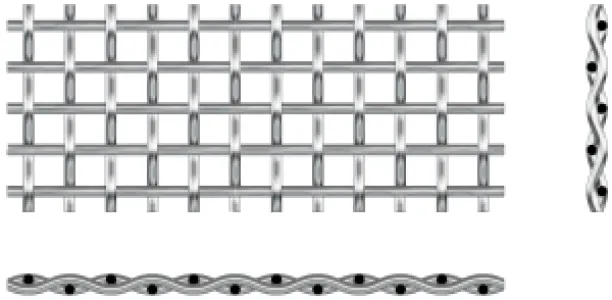
Wire mesh’s high surface area, predeterminable geometry, and excellent permeability make it ideal for electrode materials. In alkaline electrolysis, nickel meshes (e.g. Mat. No. 2.4060 / 2.4066) are particularly suitable, offering conductivity and resistance to the basic environment (usually potassium hydroxide). Multi-layer mesh configurations can further enhance surface area and porosity. Specific thermal treatments enable the production of these multi-layer meshes.
Porous transport layers (PTLs) in PEM electrolysis
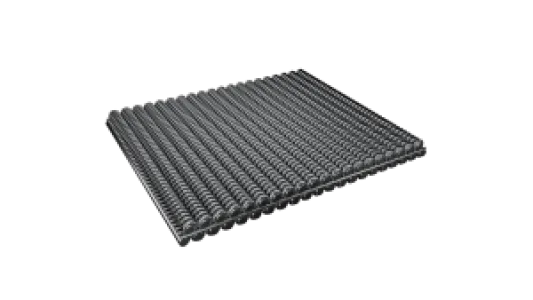
In PEM electrolysers, wire mesh serves as the porous transport layer (PTL). It delivers ultra-pure water to the Catalyst Coated Membrane (CCM), ensures uniform gas distribution, and facilitates the efficient removal of oxygen gas at the anode.
Employing specialized materials like titanium provides the high corrosion resistance necessary for demanding system environments. Advanced 3D meshes, similar to the MINIMESH® RPD HIFLO-S, allow for precise control over porosity and flow characteristics.
Laminates for high-pressure filtration
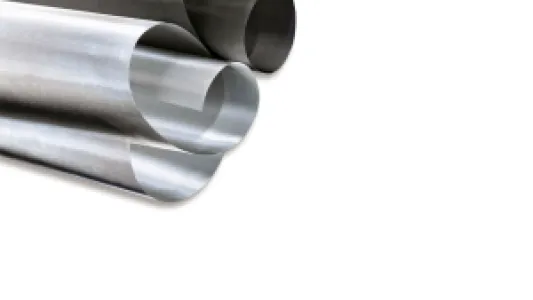
Meshes for mechanical filtration physically remove particles from the hydrogen stream, protecting sensitive components from wear and contamination. Specially developed wire mesh laminates enable this even under high-pressure conditions. By tailoring the layer configurations, flow rate, pressure loss and mechanical stability can be precisely adjusted to the specific application. This is particularly important to prevent blockages in valves and pipelines.
Catalyst support meshes
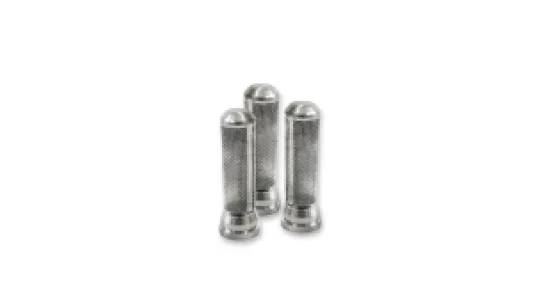
Wire mesh not only serves as a support structure for catalyst materials (e.g., Raney nickel, platinum, nickel-palladium) but can also be catalytically coated itself. This enables process-efficient solutions for the further treatment of hydrogen. Chemically stable special alloys like Inconel 600, Hastelloy C22, titanium, or nickel alloys ensure process stability, and individual forms such as pleated meshes, deep-drawn parts or precise cut-outs allow seamless integration.
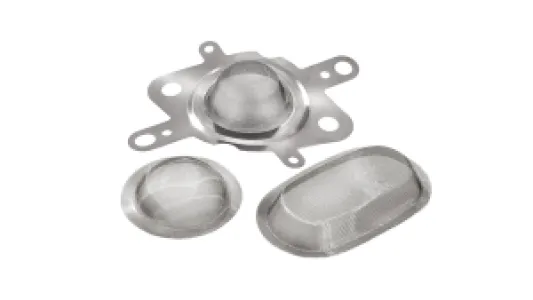
Hybrid elements in gas filtration
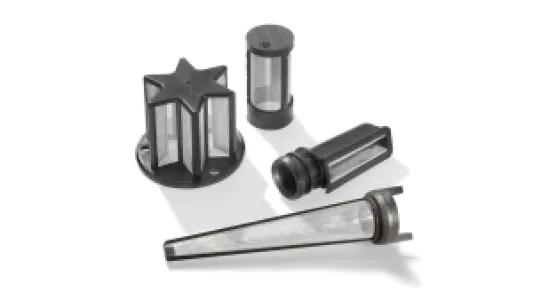
For large-scale applications with high demands on reproducibility and assembly efficiency, plastic-overmoulded filter elements offer a compelling solution. They can be manufactured to exact specifications and tailored to specific processes. Material selection—such as PP, PEEK, or PA—is based on application requirements. Optionally, an elastomer like EPDM can be overmoulded to provide a sealing function, eliminating the need for additional O-rings or sealing elements, thereby reducing assembly time and component costs.